The Perfect Second Fiddle (but Good Enough for First Chair)
The Nikon FM2, introduced in 1982, revised in 1983 (known as the FM2n),
and produced until 2001, has one of the longest production periods of any camera. When introduced, many
contemporary camera models were adding more and more automation, like the revolutionary Minolta Maxxum
7000 with autofocus and various autoexposure modes. However, many professionals distrusted autofocus and
the increasing electronic components being added to cameras; they wanted something
reliable. The FM2 filled that role for decades.
Using a lightweight, but durable copper-silumin alloy, the FM2 was a great
second camera for pros already lugging around a heavy F2. Though a further advantage is that the FM2's
shutter goes to 1/4000th of a second (a full stop faster than the F2's 1/2000th), which is the fastest
for a fully mechanical shutter (this is tied with Nikon's own FM3a, but that camera
has a few caveats that I'll address below). I am supplementing my
Nikon F with this camera, but it would be a fantastic choice for
someone wanting just one camera!
With such a long run, this camera would inevitably end up being used for some
great photos, including arguably the most famous photograph
in the world, Afghan Girl, by Steve
McCurry. I know this photo is steeped in controversy these days, but I think it can still be used to
tout the Nikon FM2 as a professional and reliable tool.
What's in an 'n'?
Briefly, let's discuss the difference between an FM2 and an FM2n. In 1983, about a year after its introduction, Nikon revised the FM2. The max flash sync speed was raised from 1/200 to 1/250, and Nikon added the word "New" to the packaging.
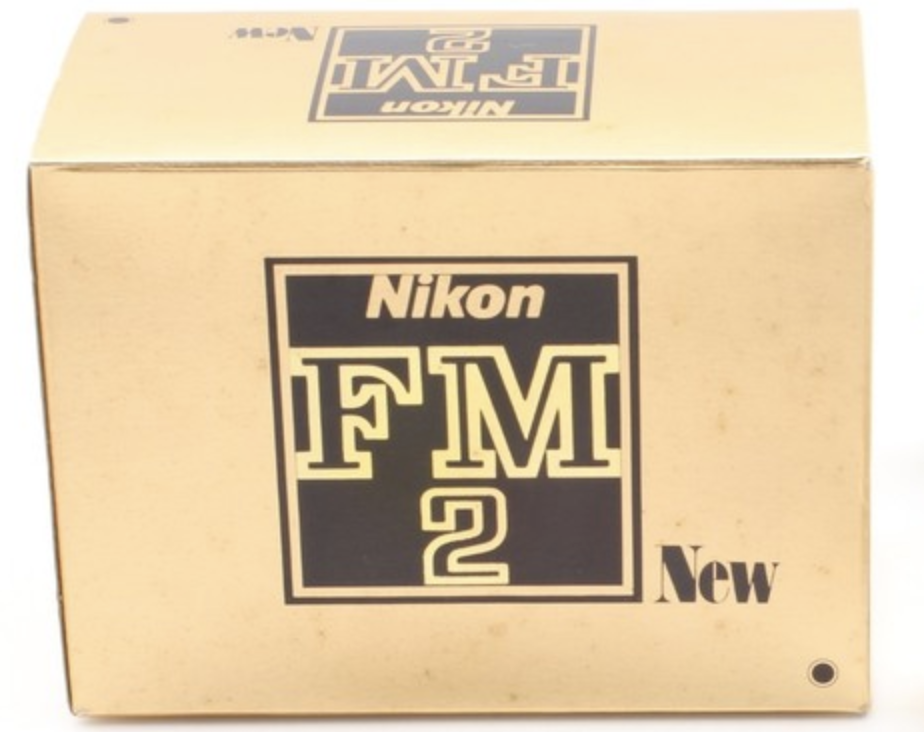
Though both versions still sport 'FM2' on the
front face of the camera, Nikon did add an 'N' to the start of the serial number on the rear of the
top plate. Since this change was made so early in the camera's long production, you are much, much more
likely to find an FM2n rather than an original. Honestly, that's for the better, given the higher flash
sync speed, but collectors might be interested in tracking down the rarer original.
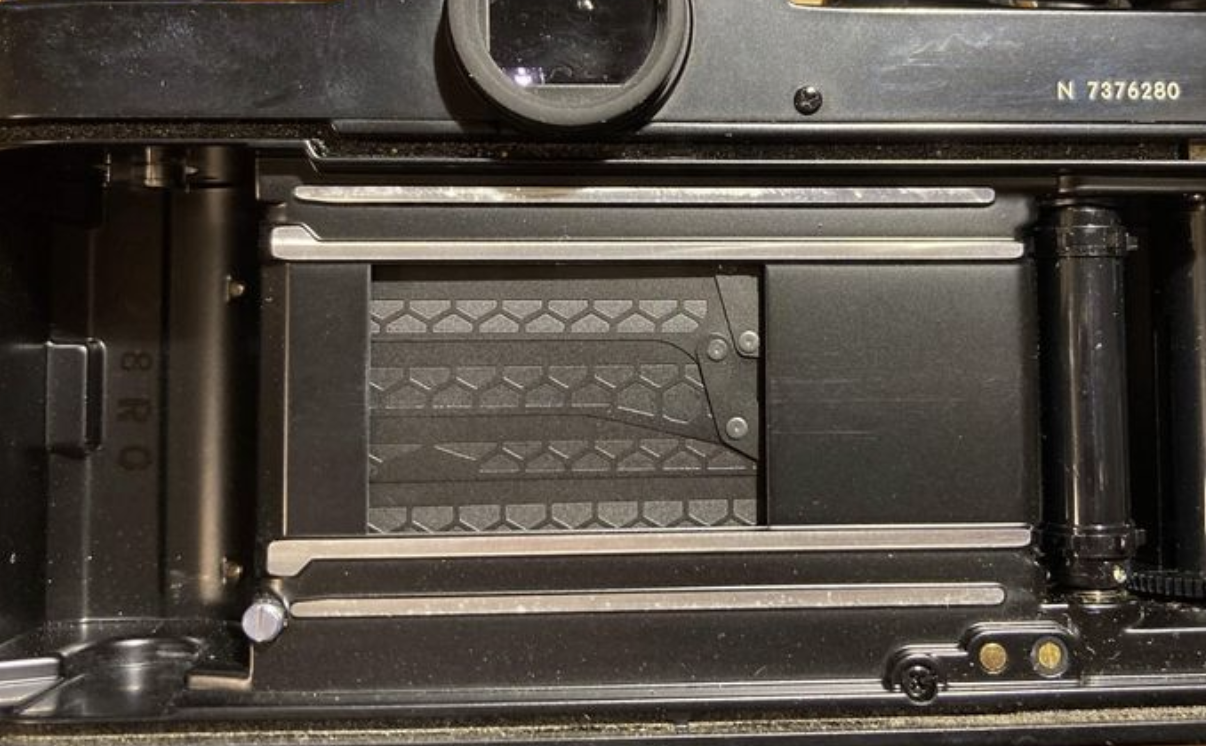
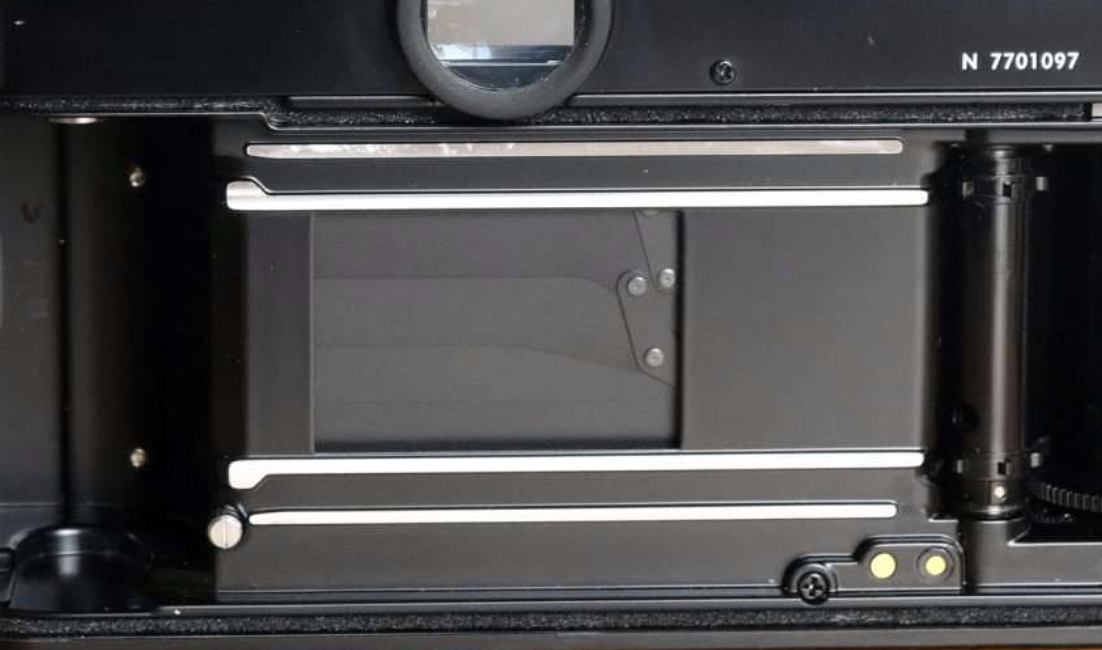
In 1989, Nikon further revised the camera, changing the shutter curtain material
from titanium to an aluminum alloy. Though titanium sounds like the nicer option, there is some
debate as to whether or not it's more durable than the aluminum shutters. However, aluminum is
much easier to work with than titanium, so the decision may have been made in the interest of
manufacturing costs and consistency. The titanium shutters can be identified by their honeycomb pattern. This
difference is pretty negligible, much less significant than the FM2/FM2n flash sync speeds, but may
pique the interest of any taxonomists out there.
Finally, let's highlight the special editions, since there are some pretty fun
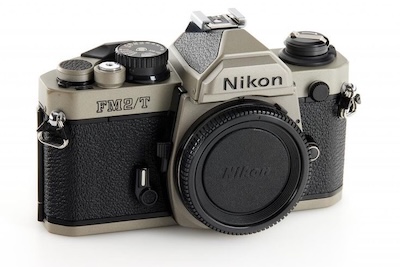
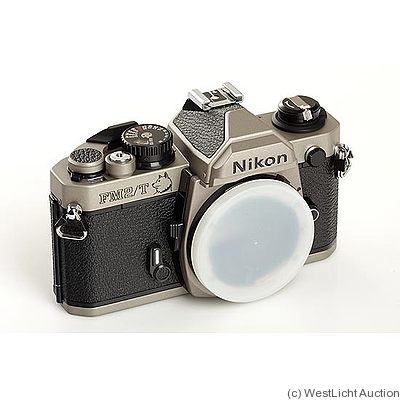
ones for the FM2! First, we have the FM2/T. Nikon has a history of making titanum versions of their
camera bodies, starting with the F2 Titan. I was tempted to pick one of these up, but the finish applied
over the titanium top and bottom plates tends to wear in an unpleasant way. The camera is 20 grams
lighter than the standard FM2, but I doubt anyone would be able to tell. This is the most common special
edition of the FM2 and was made in 1993.
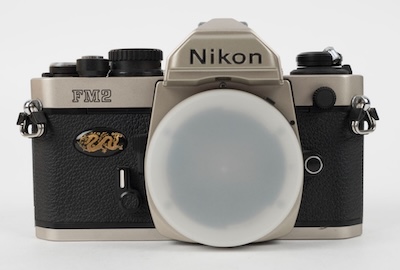
For the Y2K fetishists, there's the Year of the Dragon edition! 2000 were
made (obviously in the year 2000), and these are a bit easier to find than the other Chinese zodiac
edition. Don't be fooled by the color, though, as these are not titanium, just the
usual top and bottom plates with a different finish.
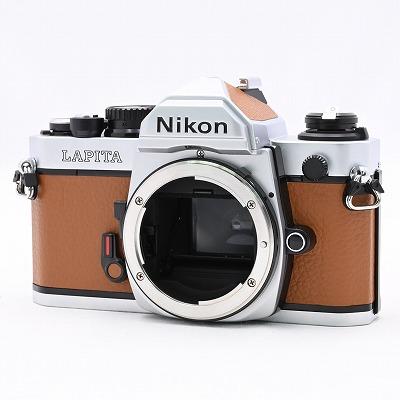
Next is another special edition I was tempted to buy (there was one listed on
JCH recently for a good price), the Lapita.
100 pieces were made in 1999, and they are wrapped in beautiful orange-tan leather. I tend to want to
be a bit less conspicuous when shooting in public, and I'd definitely cry if something happened to such
a gorgeous and rare camera in my hands!
Finally, we have the Year of the Dog variant. 300 of these were made in 1994 to
celebrate the Chinese zodiac. This special version of the FM2/T shares the same titanium top and bottom
plates, but with a dog on the front! The prices on these are frankly a little crazy.
FM2/T
Year of the Dragon
Lapita
Year of the Dog
Collecting Lenses
Since my other main camera is a Nikon F, I think it's pretty relevant to talk
about pre-Ai, Ai, and Ai-S lenses here. Earlier cameras had the light meter built into the prism, which
had a little pin that coupled to prongs mounted on the aperture ring, and had to be manually indexed
after mounting by closing down to the minimum, then to the maximum aperture, so that the meter knows
what the aperture is. In 1977, Nikon introduced its Ai, or Auto indexing lenses. They have a
little notch for a feeler tab on the camera mount that allows the in-body light meter to tell what
f-stop the lens is set to. Later, in 1981, Nikon introduced Ai-S lenses to work with Shutter-priority
and Program autoexposure modes ('S' for Shutter).
The real concern is compatibility, as mounting the wrong lens to the wrong
camera can cause expensive damage. Older cameras, like the Nikon F and F2, can use any F-mount lenses
without worry. Ai and Ai-S lenses even retained the prongs on the aperture ring to work with the older
meters (though you'll still have to perform the click-click of manually indexing). The problem
is going the other way; DO NOT mount pre-Ai lenses on later cameras! Here's a
handy compatibility
chart. Pre-Ai lenses can be modified to safely work on Ai/Ai-S bodies, but I'm still researching a
reputable person to perform this service (I may update this page once I do). It's not the hardest thing
to do yourself, but I don't really want to risk it myself.
Why not divest myself of all my pre-Ai lenses and replace them with Ai/Ai-S
equivalents? Simply put, it's the cost. Pre-Ai lenses, even factoring in paying to have them Ai
converted, are just sooo much cheaper than their Ai/Ai-S conterparts. Furthermore, optical performance
isn't that much better on most of the later lenses, and the over-built quality of all the
earlier lenses is reassuringly rugged! Plenty of people have written plenty of words about the
performance of this or that lens, but really, outside of a scientific setting, that stuff just doesn't
matter.
Why the FM2n in Particular?
I wanted a smaller, lighter SLR to supplement my Nikon F, not only to have a
second lens at the ready, but also to have a lighter, more discreet setup as an
alternative. Not that the F is a huge camera (especially in comparison to a medium- or large-format
setup), but it can be a bit bulky with the FTn prism. The FM2n fit those criteria, while also being
just as reliable and repairable (by virtue of being all machanical and produced in large quantities).
Three other options I had been eyeing pretty hard, before deciding, were the Nikon FM3a, Minolta X-700,
and the Contax Aria.
The Aria
was one of the latter-day Contax cameras, produced by Kyocera. It features a lot of impressive tech
(apparently lost knowledge nowadays, when Lomo can't even get the film advance or flash-sync right
in it's new MC-A), crammed into an absolutely diminutive SLR body! On top of that, the Aria can
mount some truly fantastic Zeiss lenses. While said Zeiss glass will set you back quite a bit, a good
condition Aria body is surprisingly cheap. Well... that's because they are considered woefully
unreliable. It's a real shame because it seems like everyone who's written about the camera really
enjoys using it, but once they break, it's pretty hopeless.
Another option I considered was the
Minolta X-700 (but the X-570 or XG-M would
be just as good). I previously owned an X-700. Though I didn't shoot with it much,
as it was all but permanently on loan to one of my friends (and then another "friend" borrowed it
and never returned it), I always appreciated the looks and handling of that camera. Though this is also
considered to be a bit unreliable (not nearly as bad as the Aria), it's not a totally lost cause once it
does break. Ultimately, what swayed me from picking one of these up was my decision to stay within the
Nikon F-mount ecosystem.
Perhaps the closest consideration was the
FM3a. This was the last new manual-focus
film SLR Nikon designed and released, being produced from 2001 to 2006 (slotting between the FM2n and F6, and well
into Nikon's burgeoning digital age). It shares the same form factor as the FM2, as well as a full range
of mechanical shutter speeds all the way up to 1/4000. The biggest difference is that shutter, though.
The FM3a can be shot in Aperture-priority mode, using electronically controlled speeds, thanks to it's
hybrid shutter design. This is a really cool trick, but that complication, as well as its relatively
short production run, means that repairability is challenging. There are no spare parts to be had, and
good luck finding anyone who wants to work on these! And considering the premium prices this model commands,
I did not relish the prospect of having an expensive paperweight on my hands.
How is it?
I previously shot with a Nikon FE2 for a while, and given that these share nearly
the exact same body design, the FM2n feels instantly familiar in my hands. All the controls are crisp
and confidence-inspiring. Though it was introduced before I was born, the form factor really is timeless,
what I would call "modern enough." The camera really does have everything you need and nothing
you don't! I want to stick with shooting all manual, all the time, as I think making mistakes forces me
(a little strictly) to learn. Automatic functions, both in exposure and focus, allow the camera to get
out of the way of a photographer's existing vision, as well as ensure that nothing but the gravest of
mistakes will occur during a shoot. These are vitally import criteria for many photographers, but
(thankfully) not me. I'm only doing this to satisfy my own whims, no contracts, no social
media, no money, just taking pictures for the sake of taking pictures! Otherwise, I'd honestly be
shooting a newish digital setup instead.
Having an in-built light meter is a nice convenience over the F, as is seeing the
aperture and shutter speed in the viewfinder. If I'm travelling light, this is the better option, which
encourages me to have a camera on me more often! Really no complaints to make at all, so far. Though
ultimately, only longterm usage can really decide that.
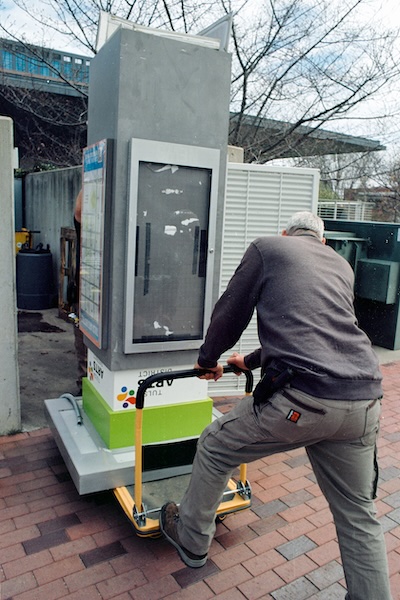
For now, let's take a look at some shots from
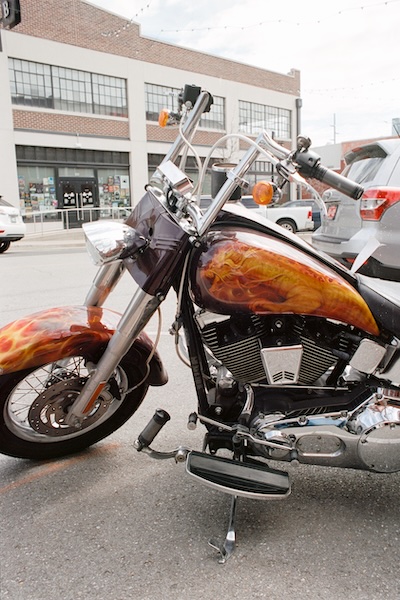
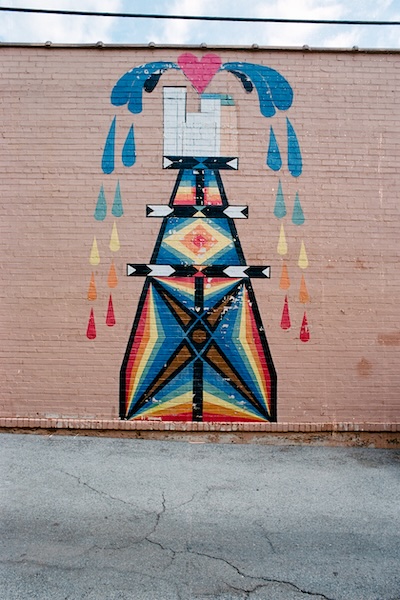
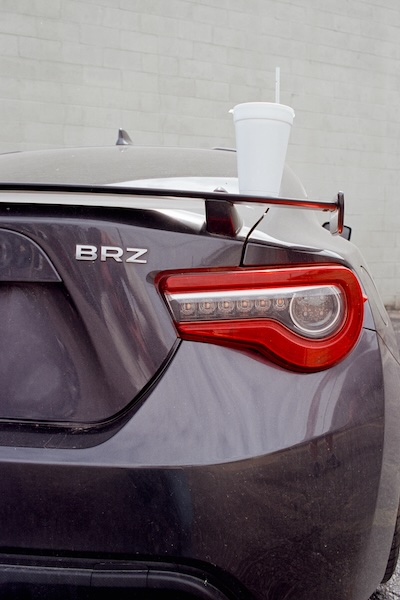
my first roll through the FM2n! These were shot on Kodak Ektar with a Nikkor 28mm f/3.5 Ai lens:


← back