Why something so different?
I thought I was pretty settled with the M-mount rangefinder form factor and
workflow. Maybe I had bought into the street photography hivemind that a manual-focus rangefinder was
pretty much the only way to shoot. Afterall, it's what all the masters shot with, why would you try
any other approach? And I do so love the M3 my grandfather left me, and that
Konica RF was pretty cool!
I was at the aquarium, running my fastest glass and pushing Tri-X to 1600, but
when I got to the otter exhibit (pretty fun and cute to see!) I could hardly get a decent shot! They
were so fast, I couldn't lower the shutter speed too much without blurring them (flash wasn't allowed
at the aquarium), and I struggled to get focus, since I couldn't stop down to increase the depth of
field. I didn't get a single decent shot of those otters.
My choice in camera was, admittedly, influenced more by what I wanted take
pictures with rather than what I wanted to take pictures of. I also value flexibility, since I like
shooting a variety of subjects (maybe I'm too unfocused, but it's more fun to try different subjects
and discover the varied challenges of each). It may not hold the same street cred, but an SLR fulfills
my wants and needs better. My local camera shop (so lucky to have one close by!) had a Nikon F5 up for
sale, and it was love at first sight.
How could it possibly work on the street?
But if I like shooting street, shouldn't I get something compact and
unobtrusive? The Nikon F5 is bulky, heavy, and loud. It draws attention to the fact that you are taking
a photo, even before you take it. I can already hear all the arguments against using such a camera to
take photos on the street, how infeasible it would be, but wait. I've shot with medium format, instant
cameras, and with the most conspicuous of all... flash. It's never been a hinderance before, and I've
made some of my most favorite pictures with cameras that gave away my intention, so why should I be
so worried about it now? There's really no reason to try to be so sneaky, no reason to hide.
There seems to also be some sort of aversion to autofocus for street
photography. There's the point that scale-focusing and the immediacy of a shutter uncoupled from any
sort of built-in metering calculations is faster than any autofocus motor or metering computer; we are
afterall dealing in tiny fractions of seconds to make our exposures. Sadly, the real reason behind this
insistence seems to be elitism, the thinking that if you're not dexterous enough to set focus manually
and clever enough to determine exposure, then you don't deserve to call yourself a "street
photographer." This is patently ridiculous, and fortunately only held by a very small percentage, but I
mention it in hopes that this kind of thinking doesn't hold anyone else back from taking photos.
But also, I don't call myself a "street photographer," and that's not my sole
subject matter, so it's not like I have any sort of expertise. I just like taking pictures.
What I like about the F5
Back in 1996, when the F5 released, this was Nikon's flagship professional
camera. It's a full "system" camera, meaning that, in addition to the lenses, you can also change out
the viewfinder, the focus screen, the back, and there is a dizzying amount of accessories, including
remote shutter controllers (which is necessary, as there's no connector for a traditional cable release
), intervalometer (for time-lapse), housings, cables to connect to computers, as well as plenty of
straps, cases, and covers. Just about any need, this camera could meet.
Part of the F5's bulk is thanks to it's in-built battery pack, which also
serves as a vertical grip with an additional shutter button. This seems like
such a little thing, but for a large camera, often mounted with large lenses, having that vertical
grip really helps with wrist strain! I also appreciate the overall ergonomics of the camera. All the
controls are well laid-out and very intuitive to control, all while keeping your hands where they need
to be to immediately take a photo. Those in-reach controls, combined with the fast autofocus and
available 8 frames per second, as well as a top shutter speed of 1/8000th of a second
and max flash sync speed of 1/300th, really make this the ideal tool for high-speed/action photography.
I haven't shot sports since I was in highschool, but I do occassionally go to auto shows and races,
which this camera is well-suited to.
Arguably, the greatest strength of this camera is its meter. The 3D Color
Matrix Meter is nearly infallible! It evaluates brightness, contrast, color, and (with
compatible autofocus lenses) distance in nearly an instant and creates basically perfect exposures
every time (at least so far in my experience). Back-lit scenes are no problem, differing skin tones are
no problem, and the narrow latitude of slide film is no problem. However, if you want to do things
differently, for any reason, you have center-weighted and spot-metering as well. This camera is
all about versatility!
Let's get to the advantage that perhaps matters the most, but feels a little
bit like a confession. Seeing through the lens, as is the nature of an SLR, is so much better for my
way of photographing. The F5 has a 100% coverage viewfinder, and being able to see the scene, exactly
as it will be framed on film, is so much more natural for me. I want to love the rangefinder,
but it feels like an additional level of abstraction that slows me down. And when it comes to wide
angle lenses, framing up precisely is just so much easier on an SLR!
Any aspects I don't like?
The obvious drawback is that this camera is heavy. Obviously,
not nearly as heavy as a large format camera, but with certain lenses and filled up with the necessary
8 AA batteries, it does get to be as heavy as a lot of medium format cameras. You can certainly wear it
around your neck on a strap, but you are going to feel it. This obviously isn't the choice
for packing lightly, and a good tripod may end up being a necessity in some situations.
Shooting with this camera makes it very obvious that you're there to take
photos, and sometimes this causes suspicion. It's pretty difficult to convince people that you're just
taking casual photos. They figure you're taking the photos to be used for a purpose, and
telling them it's just for personal photography, they can start to think you're lying, and that's where
you can run into a confrontation. You better have a convincing story, one that lines up with people's
assumptions. No one is going to bat an eye if you're out taking landscapes at a national park, but if
you're in the city, you might find yourself trying to explain what documentary photography is to
someone who is confused and maybe angry... good luck! Conversely, the look of this camera is perfect
for events, as most people will just assume you're press, especially with a big speedlight mounted on
top.
So is this The One?
Honestly, who knows. I kind of want to add an F100 (if I can find one in decent
condition) or an F6 (if I feel like spending that kind of cash) to have a second lens immediately
available when shooting, just to have more situational coverage (and not a second, heavy F5
around my neck). And when this F5 has an issue, how easy is it going to be to fix? As the years go by,
it'll be harder and harder to find someone to repair it (but at least it should be way easier than the
Konica Hexar RF). At that time, will it be worth it? Will I switch to a digital body? These are
questions really best left at "we'll cross that bridge when we get to it," but it's what keeps me from
declaring this my last camera. And why should I be so final about it anyways?
I'll just have to enjoy running this camera for as long as I end up using it.
Nothing's forever, and there are always plenty of viable options out there. It's not something I should
stress about.
Alright, let's see some photos
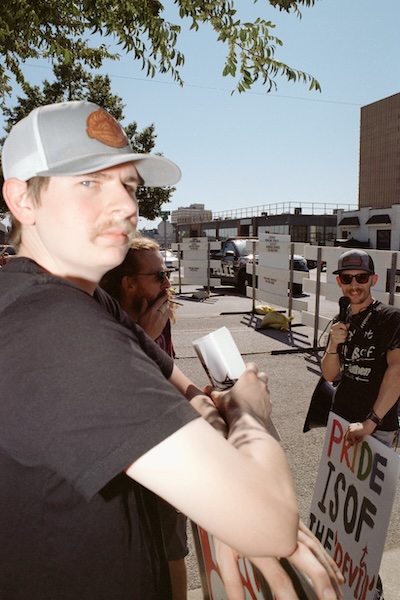
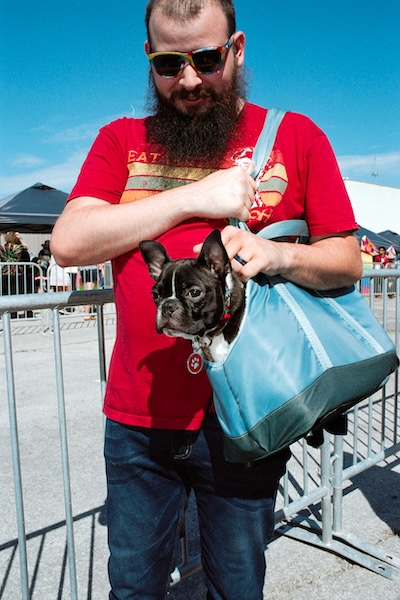
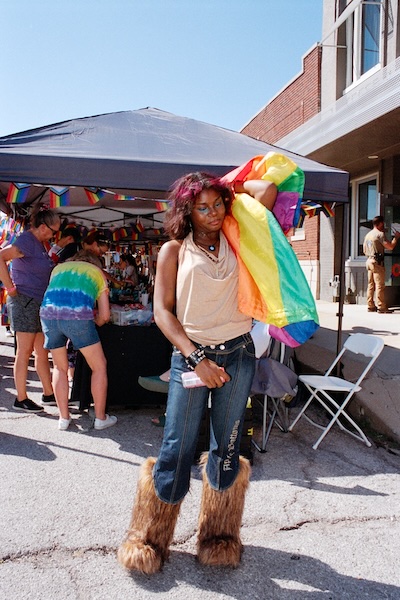
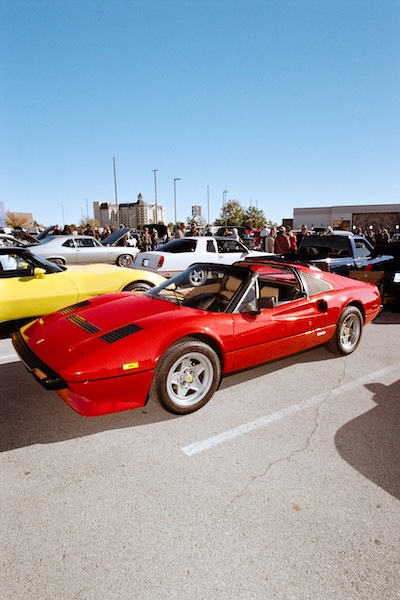
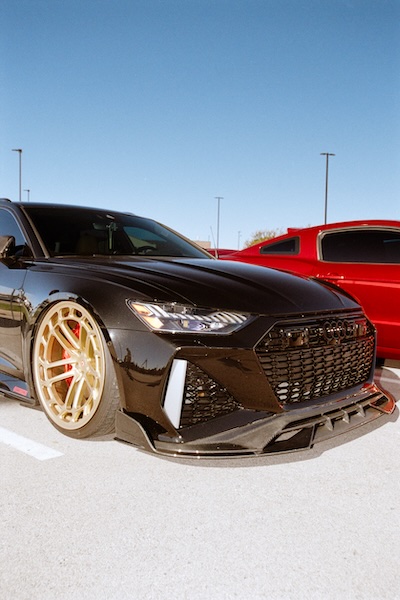
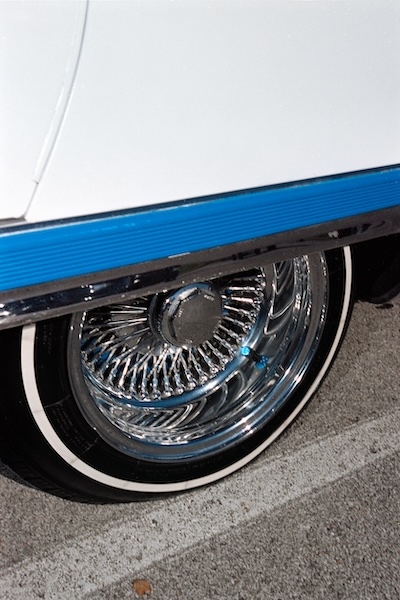
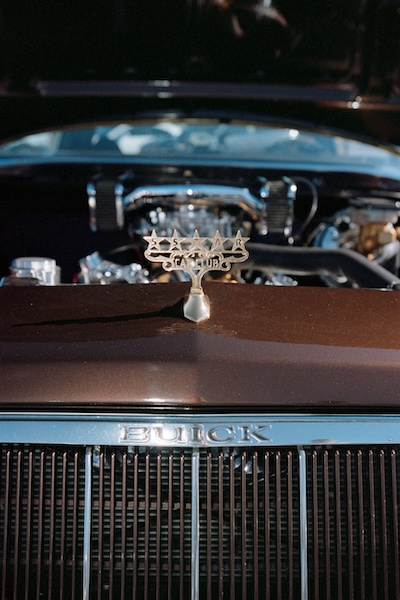
These were taken with a Nikkor 28 f/2.8D and a Nikkor 17-35 f/2.8D lenses, shot on Kodak Portra 160 and 800, as well as Pro Image 100 film. I also used a Nikon SB-28 (non-DX) flash on all of these, which was introduced along with the F5. All and all, this equipment makes up a great "period-correct" combo, from arguably the zenith of film photography.

← back